INDIBA therapy is one of the most modern physical methods used in the rehabilitation of dogs and cats. At the Multivet Active centre near Wrocław we use the INDIBA Animal Health device, which works at a constant frequency of 448 kHz in the patented Proionic® System. This article explains how it works, what effects to expect and when it is worth using.
What is INDIBA therapy?
INDIBA is a non-invasive radiofrequency therapy classed as capacitive-resistive diathermy. A gentle high-frequency current passes through the patient's tissues, stimulating them to work from within. Unlike many treatments, INDIBA does not act only on the surface - its effect reaches deeper, to muscles, tendons, ligaments and the area around the joints. This makes it a great fit for comprehensive rehabilitation programmes.
How does the 448 kHz frequency work?
The key is the constant, precisely chosen frequency of 448 kHz. At the cellular level it stimulates ion exchange across cell membranes, which translates into three basic effects: improved microcirculation, faster cellular metabolism and better oxygenation and nourishment of the tissues. In practice this means faster regeneration and less pain.
We work in two modes. The atermal mode (without noticeable heat) is used in early, acute states such as fresh injuries and swelling. The thermal mode, with pleasant, controlled warmth, works well in chronic conditions, muscle tension and joint stiffness. We always match the settings to the stage of the problem and the patient's response.
What effects does INDIBA give in animals?
- Pain relief - thanks to better circulation and its influence on nerve conduction,
- Reduced swelling - by supporting drainage and microcirculation,
- Faster tissue regeneration - of muscles, tendons and ligaments,
- Release of muscle tension and improved range of motion,
- Support for the healing of wounds and post-operative scars.
How does the treatment work and how many sessions are needed?
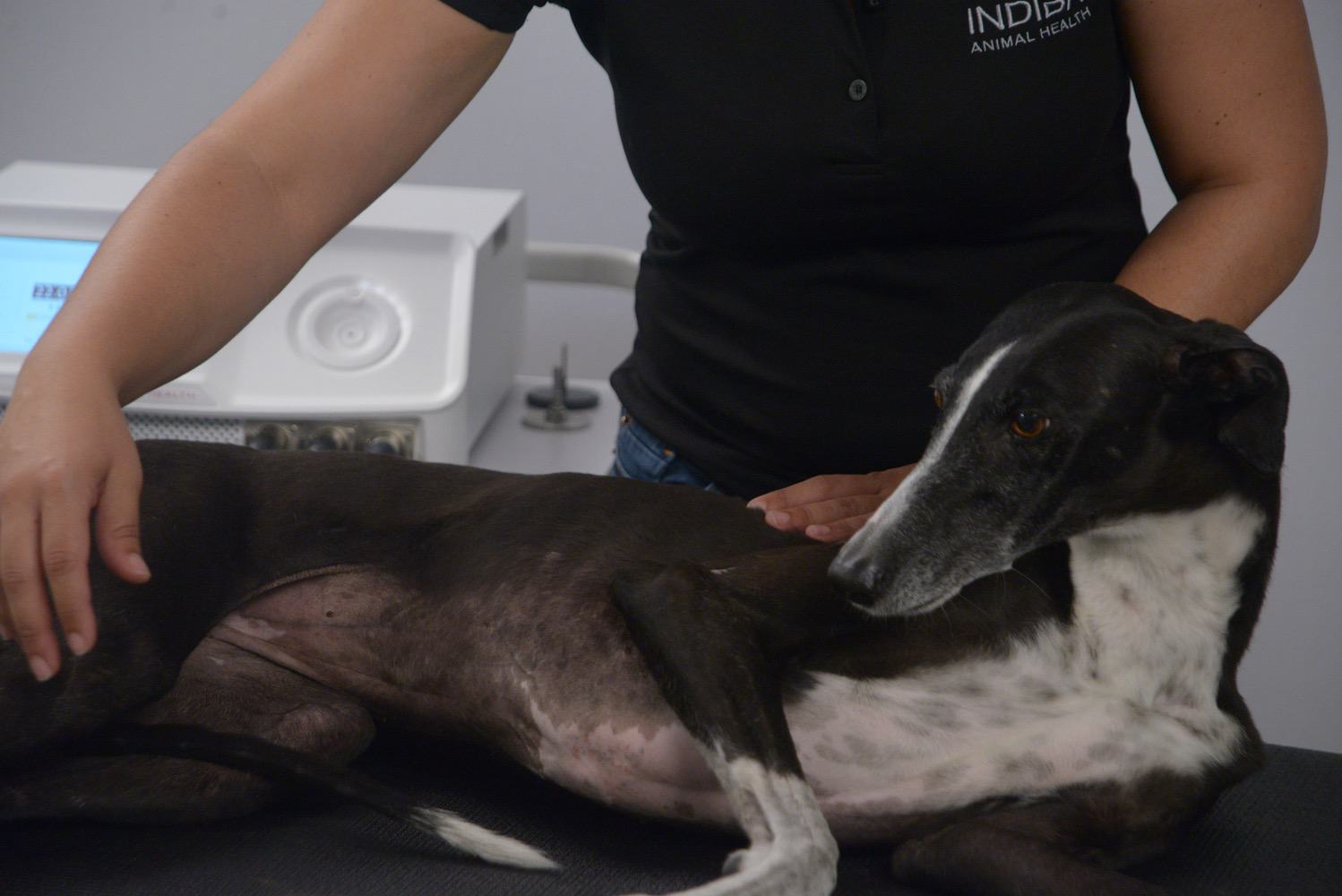
The INDIBA treatment is non-invasive and usually very well tolerated - most animals respond with relaxation and some fall asleep during it. The therapist moves a hand-held electrode over the patient's body while a second electrode stays underneath. A single session lasts a dozen or so minutes and usually requires neither shaving the coat nor anaesthesia. We tailor the number and frequency of sessions individually.
Safety and qualification
A qualifying assessment is required before therapy. As with any physical therapy there are contraindications - such as cancer in the treatment area, pregnancy or implanted electronic devices - so we perform treatments only after an in-clinic assessment. The patient's safety and comfort are our priority.
Want to check whether INDIBA therapy could help your pet? Learn more about INDIBA therapy in Wrocław, read which conditions it helps, or book a rehabilitation consultation at Multivet Active near Wrocław.