Surgery is often only the beginning of the road to recovery. How quickly and fully a dog returns to fitness largely depends on well-run post-operative rehabilitation. In this article we explain why recovery after surgery matters so much, how it works, how long it takes and what you can do as an owner.
Why is rehabilitation after surgery important?
After orthopaedic or neurological surgery a dog usually spares the operated limb. This quickly leads to muscle wasting, joint stiffness and the reinforcement of an incorrect movement pattern. Rehabilitation counters this: it reduces pain and swelling, protects against contractures and, above all, teaches the dog to load its limbs correctly and symmetrically. As a result the patient returns to form faster and more fully, and the risk of complications falls.
Stages of the return to fitness
We always adapt the programme to the type of surgery and the surgeon's recommendations, but we usually distinguish several phases:
- Early phase - controlling pain and swelling, gentle passive exercises and careful muscle activation,
- Middle phase - gradually increasing load, balance and proprioception work, working on range of motion,
- Final phase - rebuilding strength and endurance and a safe return to full activity.
Which methods do we use?
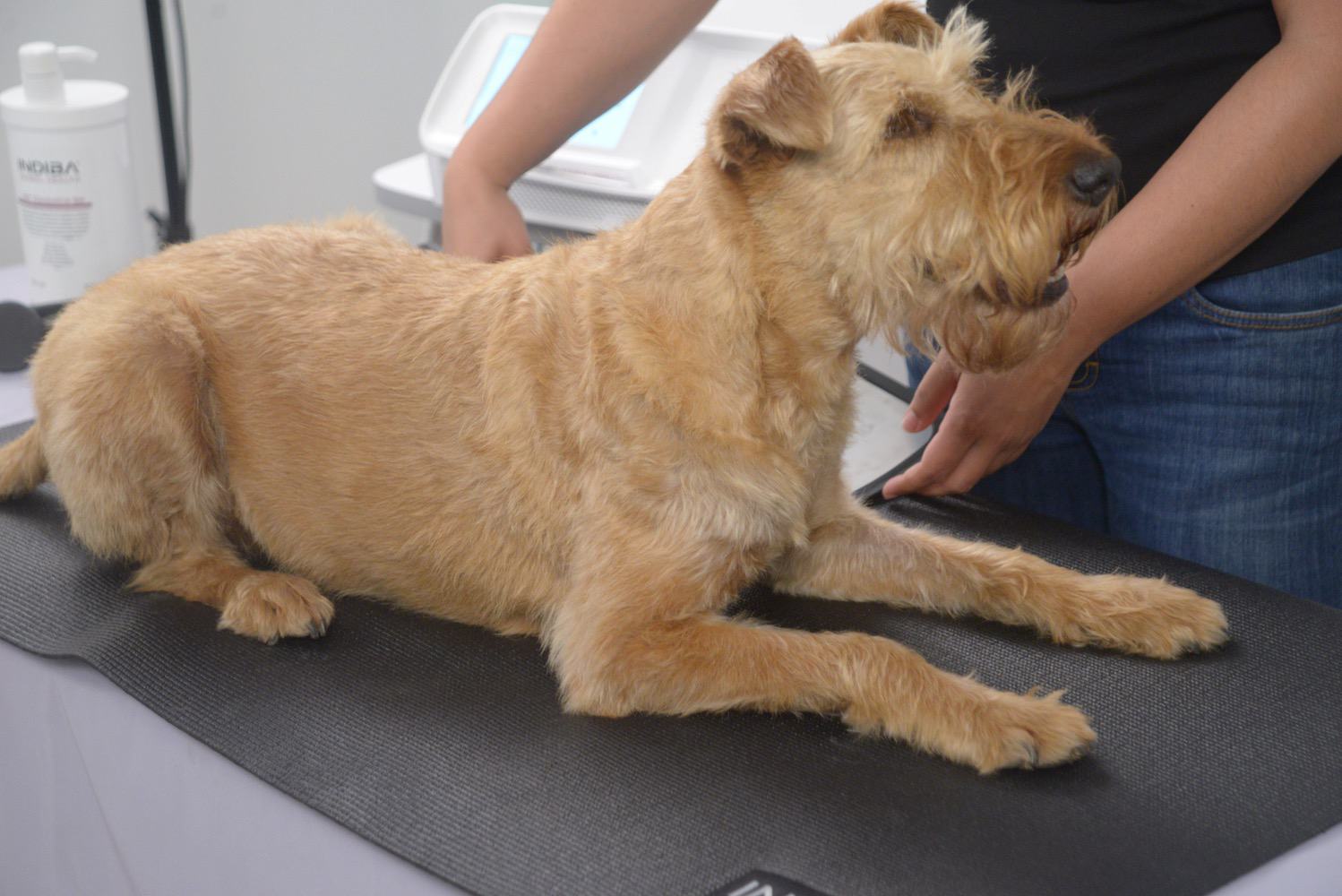
Effective rehabilitation combines several methods into one coherent plan. At Multivet Active we use, among others, the water treadmill (offloaded training), INDIBA therapy (tissue regeneration and pain relief), manual therapy, massage and therapeutic exercise. The choice depends on the patient and the stage of recovery.
How long does rehabilitation take?
Recovery time depends on the type of surgery, the dog's age and condition and its starting state. After simpler procedures recovery may take a few weeks; after extensive orthopaedic or neurological surgery, several months. Regularity is key: shorter, systematic sessions give better results than intensive but irregular visits.
The owner's role and common mistakes
Success depends heavily on the home. It is very important to follow the recommendations on limiting activity (e.g. no jumping or running), control body weight and regularly perform the prescribed home exercises. The most common mistakes are returning to full activity too soon, ignoring diet and stopping rehabilitation as soon as the dog feels better - which is exactly when lasting results are consolidated.
Is your dog awaiting surgery or has just had it? See our dog rehabilitation in Wrocław and book a consultation - together we will plan a safe return to form.