
Rupture of the cranial cruciate ligament is one of the most common orthopaedic injuries in dogs. After surgery, well-planned rehabilitation is crucial - it decides whether the dog regains full fitness and avoids complications. We explain what the recovery process looks like.
What is a cruciate ligament rupture?
The cranial cruciate ligament stabilises the knee joint. Its damage - partial or complete - causes instability of the knee, pain and lameness. In dogs it most often results from chronic degenerative changes in the ligament rather than a single injury, which is why the problem often affects both hind limbs over time.
Symptoms to watch for
- sudden or increasing lameness on a hind limb,
- offloading the leg at rest (touching the ground only with the toes),
- stiffness after rest and reluctance to jump or climb stairs,
- muscle wasting of the thigh on the affected side,
- a "clicking" or catching in the knee during movement.
Treatment and why rehabilitation is essential
In most cases - especially in medium and large dogs - surgical treatment is used, e.g. the TPLO or TTA method, which changes the biomechanics of the joint and restores its stability. Surgery alone, however, does not immediately rebuild muscle strength or a correct gait. Without rehabilitation the dog spares the limb for a long time, which delays the return to fitness and increases the risk of overloading the other leg.
What does rehabilitation after TPLO look like?
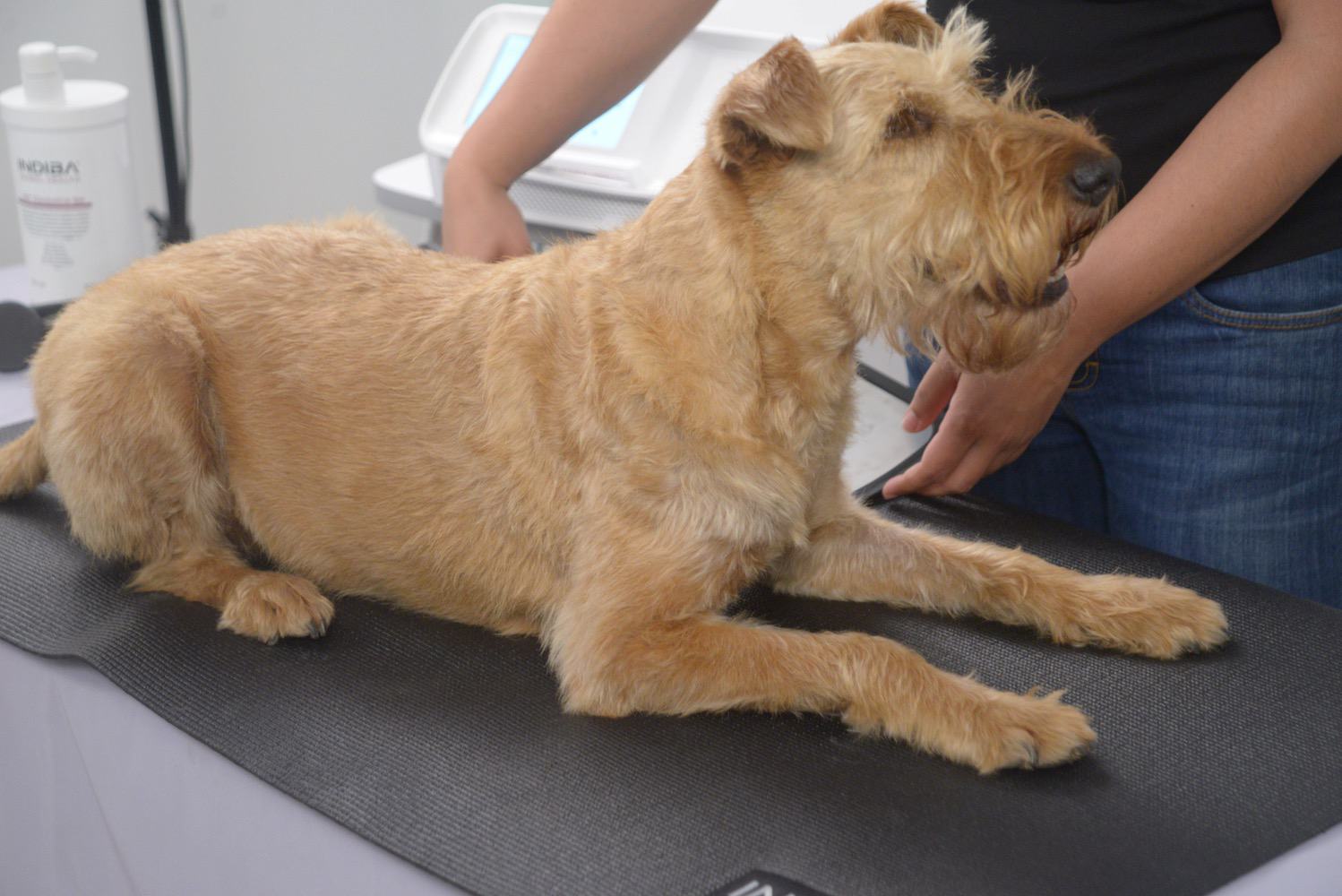
We spread the programme over several weeks and adapt it to the surgeon's recommendations. In the first phase we focus on controlling pain and swelling and gently activating the muscles. In the following weeks we gradually increase the load, introducing balance and proprioception exercises. The water treadmill is especially valuable, letting the dog train its gait in safe offloading, while INDIBA therapy supports healing and eases pain.
What to avoid during recovery
Discipline matters during this period: we avoid running, jumping, sudden starts and slippery floors, and walk on the lead as recommended. It is also worth keeping the dog at a correct weight, because excess weight further loads the operated joint.
Is your dog after knee surgery? Let's plan its return to fitness - see our dog rehabilitation in Wrocław or read the general guide on dog rehabilitation after surgery.