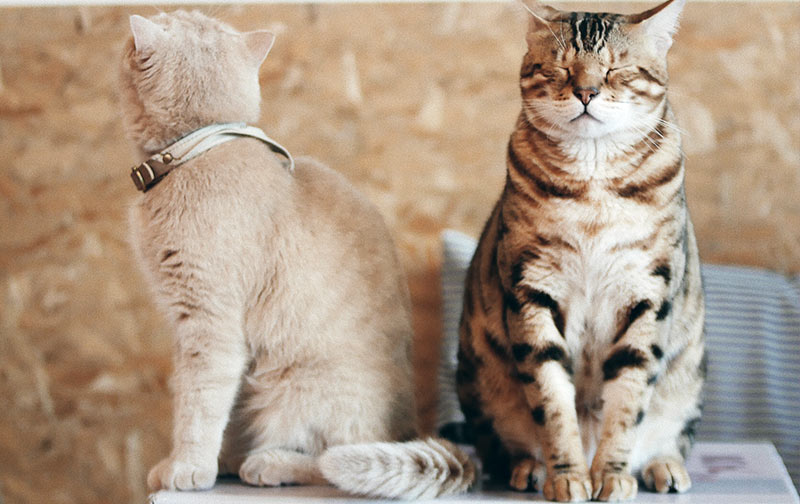
Cat physiotherapy has its own rules. Cats are exceptionally sensitive to stress, new surroundings and haste, so cat rehabilitation calls for a different approach than working with a dog. Done well, it can significantly improve a cat's quality of life after an injury, surgery or in chronic conditions. Here is what it involves and what is worth knowing.
Why are cats demanding patients?
Cats mask pain far better than dogs - an instinct that in the wild protects them from predators. An owner often only notices that the cat jumps less, has stopped climbing onto the windowsill or has started toileting outside the litter box. Cats also dislike being forced, so therapy cannot be pushed. The key is patience, calm and the ability to read subtle signals. At the Multivet Active centre near Wrocław we work with cats at their own pace.
When does a cat need rehabilitation?
There are many indications: recovery after orthopaedic and neurological surgery, the aftermath of injuries (e.g. after a fall from height), degenerative joint disease - which is very common and underdiagnosed in cats - as well as obesity and neurological problems. Rehabilitation also helps older cats maintain fitness and comfort.
What does a session with a cat look like?
Sessions are short, calm and carried out in a quiet setting so as not to overwhelm the patient. We start by letting the cat get used to the room and adapt the therapy to its mood and tolerance on the day. Rather than forcing a full plan, we work in stages and use positive reinforcement. For a cat, less is often more.
Which methods do we use with cats?
The basis is gentle manual therapy, massage and mild exercises that improve range of motion and strength. INDIBA therapy works very well in cats - it is non-invasive and usually felt as pleasant warmth, so it is well tolerated. We often "dress" exercises up as play, using the cat's natural reflexes, toys and treats.
The role of the home environment
For cats, arranging the space matters enormously: a low litter-box entry, intermediate steps to favourite spots, a warm bed and anti-slip surfaces genuinely make life easier for a cat with limited mobility.
Is your cat recovering from an injury or slowing down with age? Discover our cat rehabilitation and full animal physiotherapy at Multivet Active.